
Replacing broken arms on glasses
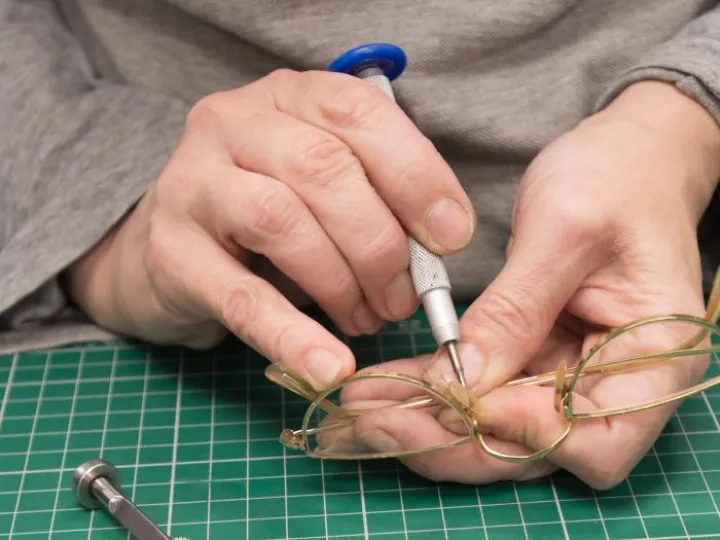
Broken glasses arms matter more than you think
When clients contact us about a broken or bent glasses arm, their first question is often whether they can wait before repairing it or if it needs immediate attention. Many people do not realise that the arms, or temples, do much more than hold the frame on your face. They keep the lenses properly aligned with your eyes, help distribute weight around your ears and nose, and are key to how stable and comfortable your glasses feel all day.
From what we have seen, when an arm becomes loose, spreads out, or breaks, problems show up fast. Lenses may tilt or sit too high or low, which can affect your prescription and even strain your eyes over time. Glasses that slide down your nose or sit unevenly never feel comfortable, and clients often say this makes them adjust their frames constantly. This habit can wear out the hinges faster and make accidental drops more likely.
We often see quick-fix ideas for broken glasses arms online, like using twist ties, toothpicks, glue, or makeshift splints. We get why people try these in emergencies. However, our experience shows that these fixes almost always come with trade-offs in fit, looks, and safety. They might help for a day or two, but they cannot restore the exact alignment and stability that a proper repair provides. Customers tell us that after getting a professional repair, they realise how much they had been putting up with a poor fit.
What usually goes wrong with glasses arms
In our workshops, we notice the same types of wear and damage to glasses arms again and again. Everyday habits, accidents, or just material fatigue are usually to blame. One common issue is arms spreading wider over time, especially when people push their glasses onto the top of their head instead of taking them off properly. This repeated bending makes the temples bow out, so the frame feels loose and unstable.
Crooked arms are another common problem. If one arm bends more than the other at the hinge or along its length, the frame will sit unevenly, with one lens higher than the other. Clients often notice something is off when one side of the frame feels closer to their cheek or ear. When we check these frames, we often find small twists that are hard to see but really affect the fit. Over time, these twists can put extra stress on the hinge screws and barrels, making them more likely to loosen or break.
We also see many cases where the hinge screw falls out, or the threads get stripped, leaving the arm hanging or loose. Opening and closing the temples every day puts a lot of pressure on these small parts, and if the screw is the wrong size or made from poor-quality metal, it is more likely to fail. Sweat and cosmetics can also cause corrosion around the hinge. From our experience, once a hinge is damaged like this, repairs need to fix the alignment and thread condition, not just replace the screw. Otherwise, the problem will come back.
Short-term DIY fixes and their limits
Broken glasses arms are inconvenient and often happen at the worst times, so we understand that DIY fixes can be useful as a short-term solution. Many clients have tried using a twist tie or a toothpick through the hinge holes when a screw is missing. These makeshift fasteners can keep the arm in place for a while, but the glasses usually can't be folded, and the result rarely looks or feels neat.
Some people try glues or epoxies to fix snapped plastic arms or cracked hinges. Online tips often suggest two-part epoxy or strong glue to hold broken parts together. In our experience, these fixes might work for very light, occasional use, but they almost always fail with the constant bending and movement the glasses arms go through every day. Glue can also leave bulky or messy lines and may affect how the frame sits on your ear.
Another common DIY method is heating and bending the arms at home. Some guides suggest using a hairdryer or warm water to soften plastic arms for reshaping. Gentle heat can help adjust plastic, but from our repair work, we know that too much heat can damage lens coatings, warp the frame, or make some plastics more brittle. These quick fixes might get you through a weekend or short trip, but use them only as temporary solutions. Clients often tell us they wish they had chosen professional repair sooner instead of relying on makeshift fixes.
How professional arm repair works
When we repair glasses temple arms in our workshops, we use a step-by-step process to restore both function and appearance. We begin by carefully inspecting the frame, checking the hinge barrels, screws, arm shape, and any damage to nearby parts. Our technicians decide if the arms can be straightened and reinforced or if new arms are needed for long-term stability. Often, small bends or twists can be fixed with careful adjustments, but cracks, missing pieces, or heavy corrosion usually require new parts.
For metal frames, we use special tools and sometimes micro-welding equipment to repair hinges and arm sections. Stainless steel, titanium, and other alloys react differently to heat and pressure, so we adjust our methods to the material. In our experience, careful welding and reshaping can restore many damaged arms to full strength and proper alignment. Clients are often surprised at how invisible these repairs are once the frame is cleaned and refinished.
Plastic arms need a different approach. We use controlled heat, shaping tools, and sometimes reinforcement to restore or rebuild the arm's shape. If replacement arms are needed, UK suppliers offer many colours, sizes, and finishes, but getting a perfect match still takes skill. We check the original arm's shape, thickness, curve, and colour, and then find or customise replacements so both arms look and feel like they belong together. Our experience shows that this careful attention and the right tools deliver a professional finish that DIY fixes cannot match.
Keeping frames balanced
A big difference between DIY repairs and professional work is how replacement arms are chosen and fitted. We often see frames where someone has used arms from a cheap pair of reading glasses, which works in a pinch but usually looks mismatched and feels uneven. This might help in an emergency, but it is rarely a good long-term solution. Our experience shows that matching replacement arms to your frame's shape is essential.
When we choose replacement arms, we consider length, width, bend angle, and the ear curve shape. Most adult frames have temple lengths between 135 and 150 millimetres, but even small differences can change how the frame sits and feels. We aim for arms that balance the frame on your face, with equal contact on both sides and no pressure points. Clients often say their glasses feel more comfortable after new arms are fitted than before they broke.
We also make sure the hinges are compatible. DIY screw replacement kits come with many screws and simple tools, which can help if you lose a screw. But if the threads in the barrel are worn or damaged, a new screw might not stay in place. In those cases, we repair or replace the hinge before adding new screws. Our experience shows this extra step prevents repeat issues and keeps the arms aligned. Customers tell us this thorough approach makes them feel more confident about their repaired frames.
When repair is better than replacement
People often ask whether it is better to repair glasses arms or buy a new frame. In our experience, repair is usually worth it if the front of the frame is in good shape, the lenses work for you, and the damage is only to the temples or hinges. Professional repairs can save money compared to replacing a favourite designer frame, especially if you have prescription lenses. Many clients tell us they would rather keep a frame that fits well than start over with something new.
To help your glasses arms last longer after repair or replacement, we suggest a few simple habits. Take off your glasses with both hands to avoid twisting the frame and hinges, which keeps the arms aligned. Try not to push your glasses onto your head when not using them, as this can make the temples spread out. Store your glasses in a case instead of loose in a bag to protect them from bumps and bending, and keep the hinges clean to prevent corrosion from sweat and cosmetics.
We also recommend regular checkups. If your glasses start to feel loose, crooked, or uncomfortable, small adjustments to the arms can often fix the fit before bigger problems develop. Our experience shows that caring for your glasses and getting repairs early helps both metal and plastic arms last much longer. Clients tell us that treating their glasses as precision tools and seeking help early means fewer emergencies and more consistent comfort.
Making arm repairs work for you
For us, replacing glasses arms is not just about making a broken frame usable again. It is about bringing back your confidence, comfort, and clear vision. Repairing temple arms puts the lenses in the right place, keeps the frame sitting evenly, and eliminates the small annoyances caused by loose or crooked arms. After thousands of repairs, we know professional work delivers results that quick fixes cannot match in the long run.
People only realise how important their glasses' arms are when something breaks. When they see how carefully we match replacement arms, align hinges, and check the frame's balance, they understand that these simple parts need expert care. Clients tell us that having a trusted specialist to help when an arm snaps or a hinge fails makes owning and wearing glasses much less stressful.
If your glasses arms are loose, bent, or broken, we encourage you to get advice instead of relying on makeshift repairs for too long. Whether you need a quick DIY screw replacement or a full professional repair with new arms fitted and aligned, a clear assessment will help you choose the best option. In our experience, fixing arm problems quickly keeps your lenses working well, helps your favourite frames last longer, and lets you enjoy stable, comfortable vision every day.
More on glasses