How do I clean glasses properly?
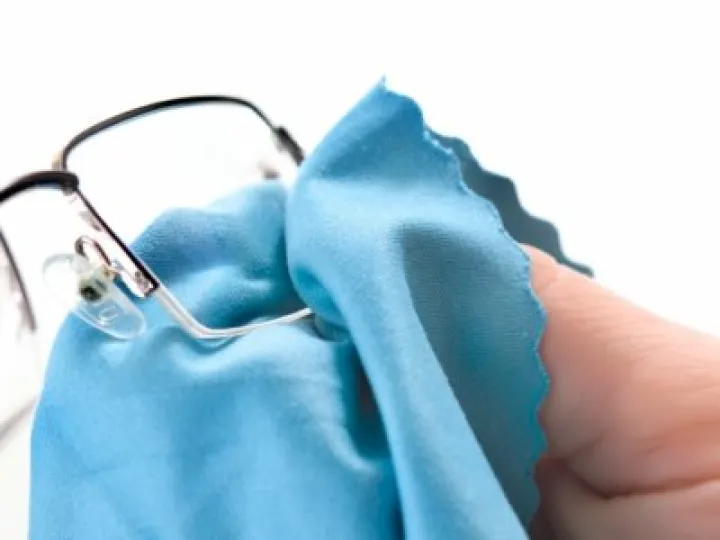
How to clean glasses
Regular cleaning of spectacles will ensure clear vision and help extend their lifespan before they need repair or replacement. Glasses take a lot of punishment over the years. If you wear spectacles daily, they will require regular maintenance.
Glasses used less frequently, such as sunglasses, may be kept in a drawer or left out until needed. However they are used, glasses protect your eyes from everyday dirt and dust, cope with sweat and oils from your skin, and are handled several times a day — no wonder they need regular cleaning and careful handling to stay in tip-top condition.
It's easy to damage your specs by cleaning them incorrectly or using inappropriate cleaning materials. Knowing the best way to clean your glasses is useful. Here are some tips to help you keep your glasses as good as new for as long as possible.
Tips for cleaning lenses
Before cleaning your lenses, it's a good idea to wash your hands. Oils and dirt transfer easily to glass and polycarbonate; if they are on your hands, they will likely end up on your lenses. Gritty material on your hands or fingers may even cause tiny scratches on the lens surfaces, so it's best to start correctly. It's a bad idea to lick lenses to clean them. It's unhygienic, and saliva isn't effective at cleaning.
You can run glasses under a gentle stream of lukewarm tap water. Don't let the water get too hot, though, as this may damage some coatings. It will remove dust and debris but is unlikely to affect grease stains or smears. Adding a tiny drop of dishwashing liquid will help, but be sure to remove all soapy traces, or the lenses will smear when they dry. Avoid using soaps or cleaners that contain ammonia or other harsh chemicals. Your lenses may have specialist coatings sensitive to the strong chemicals often used in household cleaners.
How to hold your glasses for cleaning
Take care to hold glasses properly when cleaning them. Do not hold glasses by the arms or hinges when cleaning. Rubbing lenses will apply pressure to the lenses and strain the hinge, potentially bending the arm out of shape. Holding the frames firmly across the bridge between your forefinger and thumb is best. It provides ample room for cleaning without damaging delicate eyewear components. Sometimes, dirt builds up around the hinges or between the lenses and the frame. Use a soft toothbrush and warm, soapy water, but be careful not to touch the lenses with the bristles.
Choose good lens cleaning products
Cleaning sprays are ideal for thoroughly cleaning lenses. They usually come in small pump-action bottles. Many people spray the cleaner directly onto the lens, but this is not advisable. Lenses may have tiny drill holes, which can cause damage over time if filled with cleaning fluid. It is far better to spray a microfibre cleaning cloth and apply it to the lens. This ensures you clean the lens with just enough moisture to remove grease and grime.
Specialist lens cleaners are safe and effective on all lens surfaces, including coated lenses. Gently rub the lens in a circular motion with the cloth until the glass is clear, then wipe away any excess. If your lenses have an anti-reflective (AR) coating, make sure the cleaner is approved for use on AR lenses.
Use optical quality cleaning cloths
Optical quality microfibre cloths are the best for cleaning glasses and spectacles. They are soft, lint-free and have no nylon hem that may cause damage. The higher the quality, the better the job. Cheaper cleaning cloths tend to break down with use, splitting the fibres and leaving lint residues.
Good quality glass cloths are essential for a streak-free surface. Optical-quality cleaning cloths are very soft, washable, easy to rinse, and suitable for all sensitive surfaces, including cameras, laptops, mobile phones, and even wine glasses. For best results, cleaning cloths should be washed regularly, preferably at temperatures below 40 degrees and without fabric softener.
Using paper towels, tissues, dishcloths, or clothing to wipe your lenses may seem convenient, but it should be avoided. Paper towels are made from wood-chip pulp treated with bleaching solutions and may cause tiny microscratches on any lens surface coating. There is a risk of transferring dirt or debris onto the lens from your coat sleeve or other clothing items, which can cause microscopic scratches, even on modern polycarbonate lenses with a hard coating.
Use quality lens-cleaning wipes
An alternative to cleaning sprays is lens wipes. Wipes are often individually wrapped, which makes them highly portable. You can pop a couple into your pocket or handbag for use at any time. Lens wipes enable gentle, thorough cleaning without risk of damage. They are fast-drying and give a streak-free finish.
Good-quality lens wipes will be manufactured from micro-fine tissue and won't contain harsh cleaning agents. The cleaning fluid in lens wipes is formulated to evaporate quickly, eliminating the need for a cleaning cloth. Cleaning cloths can become dirty, picking up dust and grime, while spray bottles take up space in the carry case. Pre-moistened lens wipes, however, are small, often folded into even smaller sachets, very convenient and easy to use.
Pay for ultrasonic bath cleaning
Ultrasonic cleaning is the gentlest and most effective method for removing dirt from lenses and glasses frames. Ultrasonic cleaners use sound waves between 20 and 400 kHz to clean objects. A high-frequency ultrasonic cleaner can clean with great detail. Combining ultrasonic waves with an appropriate cleaning solution can clean much more thoroughly and with less abrasion than other methods.
High-frequency sound waves generate cavitation bubbles that remove dirt from an object's surface at the microscopic level, making them ideal for complex surfaces with crevices, cracks, or hard-to-clean areas. It removes dirt, grease, and grime, leaving lenses crystal-clear and glasses feeling "like new". An ultrasonic bath is the ideal cleaning system for spectacles, watches, jewellery and similar items.